

Yuhua 2021 – 2022
Yuhua 2021 – 2022
About The Greenhouse Lab: Yuhua 2021 – 2022
The Greenhouse Lab – Yuhua 2021 – 2022 was presented by ArtsWok Collaborative in partnership with Bold At Work and supported by Our Singapore Fund. It involved 8 Labbers from different fields of art education, art therapy, arts management, architecture, facilitation, and community programme management.
In March 2021, Team ArtsWok began preparations for the Lab through research, as well as by connecting with local stakeholders of the Yuhua community. These included Loving Heart Multi-Service Centre, Loving Heart (Jurong), Youth Guidance Outreach Services, Lakeside Family Service Centre’s GRIT Project, Resident Committee Zone 5, as well as informal contacts of social workers who serve the residents of Yuhua.
Phase I: Community Cultural Mapping (June – October 2021)
From June to October, the Labbers underwent a Community Cultural Mapping exercise conducted by Janet Pillai (in Malaysia), a veteran cultural researcher and practitioner, via Zoom sessions and facilitated by ArtsWok on-site. The Labbers began the process with desktop research of the Yuhua vicinity and site visits led by youths from Yuhua. Following this, they conducted a baseline mapping of youths in the area in order to frame a focus area mapping exercise. This involved the Labbers designing participatory activities, which they facilitated via a workshop with a few youths, to gather their experiences and views on mental well-being. This focus area of mental well-being was set by ArtsWok for this Lab edition.
Phase II: Design, Implement, Monitor, Evaluate (November 2021 – May 2022)
After developing a mapping report based on their findings, the Labbers attended another round of workshops conducted by Ngiam Su-Lin (Executive Director of ArtsWok) and Justin Lee, a sociologist and social researcher. These were to guide them through the next four phases of the Lab – designing, implementing, monitoring, and evaluation (the DIME model). They also met with other practitioners: Izzaty Ishak from The Community Theatre, Beyond Social Services; and Lin Shi Yun and Md Muazzam (Zam) from Tak Takut Kids Club by 3Pumpkins. The practitioners shared about their community-engaged work with children and young people through the arts.
Between December 2021 and February 2022, the Labbers designed a programme logic and collectively created a theory of change framework. These helped them develop a programme focused on youths and their mental well-being. Titled Thrive-Thru, the programme consisted of 4 full-day workshops that took place in March 2022. The key objective was to build youth mental wellness through an interactive, immersive arts-based experience that encouraged co-creative processes. Thrive-Thru aimed to help build mental health literacy, individual coping strategies, and peer support for each other. Labbers facilitated most of the sessions, with additional support from Izzaty and Khoo Yi Feng (Limitless) on some segments. Monitoring and evaluation of each workshop took place at the end of each day through a mix of participatory activities, surveys, and discussions.
Highlights of the workshop activities included:
- Participants creating their own “Tree of Life” which captured their heritage, values, support systems, and other significant aspects of who they are and how they live
- Going on a bus ride and self-designed journey to learn how to pay attention to their minds and bodies in space, and how to rest
- Drama games and activities that led to the creation of short forum theatre skits, where participants could replace characters in an attempt to solve dilemmas
- Participants designing resources that would be helpful for promoting well-being for their peers, displayed in the form of a convenience store for youths
After the completion of Thrive-Thru, the Labbers prepared an overall evaluation report and shared it with the project funders, as well as the Yuhua community stakeholders whom ArtsWok engaged with in preparation of the Lab. This report included recommendations on the approaches for programming and participant engagement, which may help future youth-oriented programmes achieve fuller outcomes.
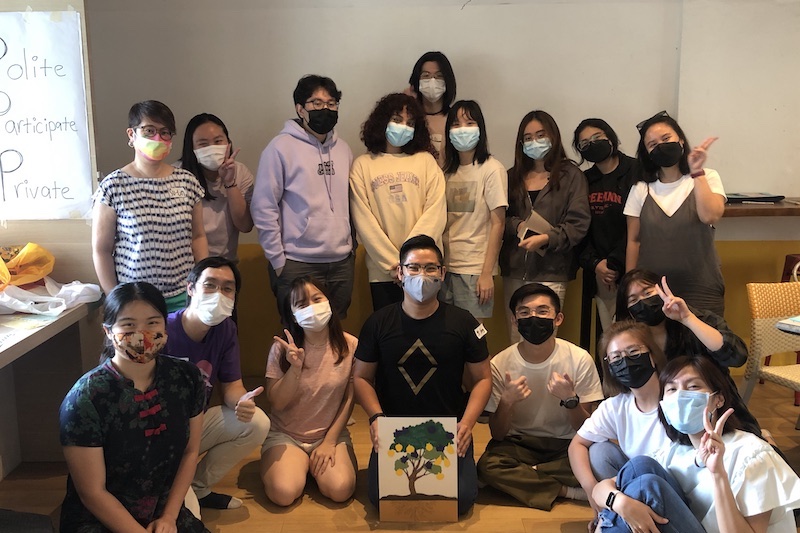
Posing with the Tree of Life activity: The Labbers, ArtsWok staff, 'Thrive-Thru' participants, and activity facilitators Izzaty Ishak and Lai Yifeng.
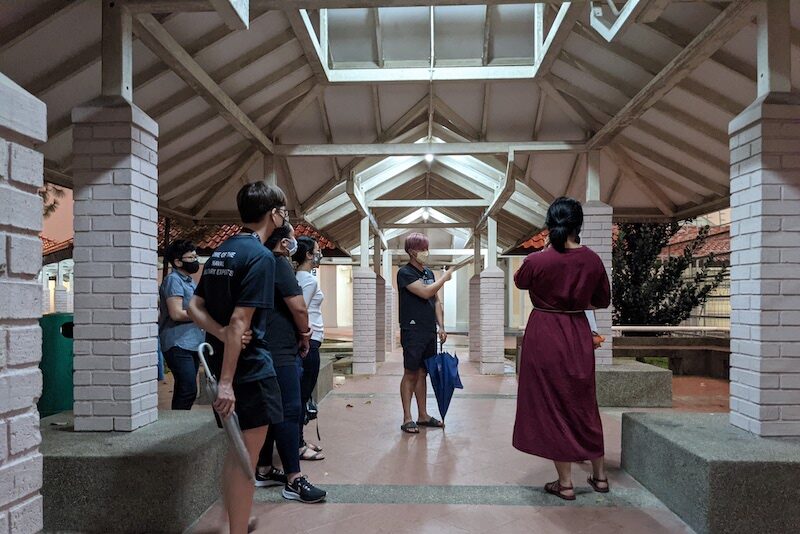
The Labbers on a site visit of Yuhua led by a youth.
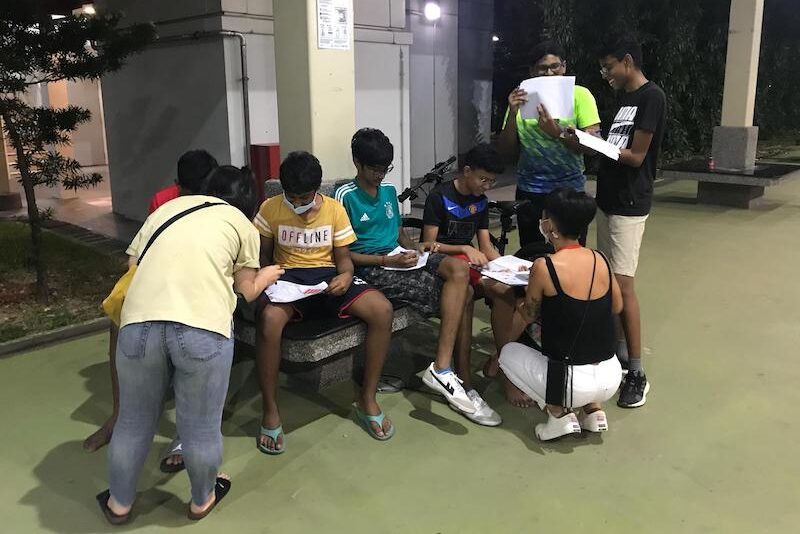
The baseline mapping workshop with youths in Yuhua.
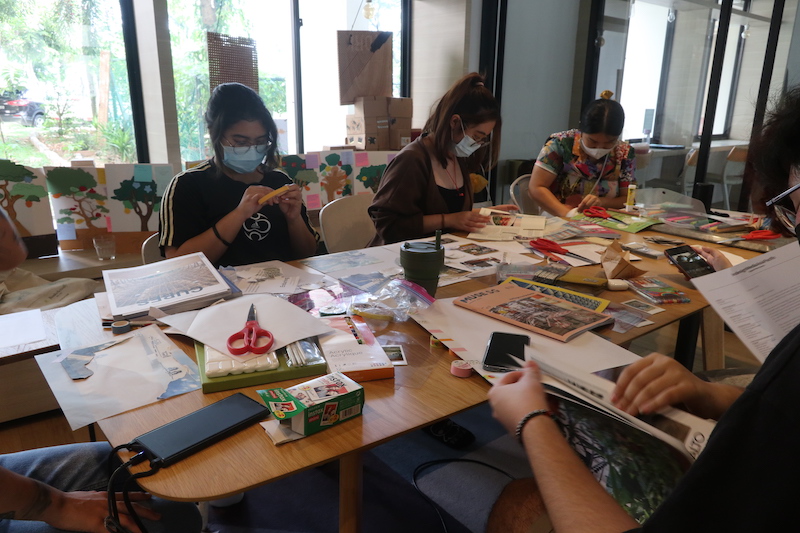
A 'Thrive-Thru' workshop session during which youths created mental health resources for their peers.
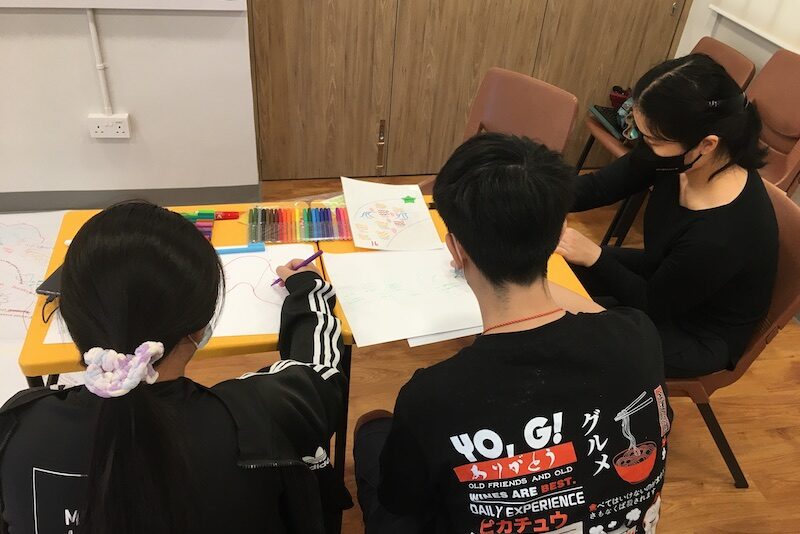
The Labbers and youths during the focus area mapping workshop on youth and mental well-being.