
Library / Project Journal
Six Months in the Wok
Library / Project Journal
Six Months in the Wok
Interview with Ashley Wong and Ryan Chia
27 Mar 2026
Locking In: A Conversation About Interning at ArtsWok
In this interview, our latest pair of interns reflect on their time at ArtsWok, and share the ways their time here has fostered new perspectives and personal growth!
From manning the front desk to interacting with seniors and (yes!) filling out spreadsheets, our Programme Assistant Ashley has been a steady and much-welcomed helping hand on ArtsWok’s programme team. An arts business management student, she’s spent the past 6 months witnessing firsthand the impact the arts can have on communities.
Transcribing and editing this is Marketing Communication Assistant Ryan, a story and content creation student and the latest voice on ArtsWok’s marketing and communication team. Ryan has spent his 6 months writing marketing copy, e-mailers, newsletters, and everything else in between — including what you’re reading right now!
1. How has your internship been?
Ashley: I think my internship has been great! Not in a sarcastic way, but I absolutely love this internship. I sound like I’m being held hostage, but I’m not. I promise.
Ryan: Durrah’s (one of Ashley’s supervisors) just off-screen somewhere…
Ashley: Yeah, she’s totally not pointing a gun at me. But it really has been very fun — prior to this, I heard a lot of horror stories about other people’s internships not going very well, and compared to them, I think I’ve been really blessed with this opportunity.
One of the reasons is how easily I was able to integrate into the company, because of how similar our working styles are. I think I adapted quite well. And also, I really like the working environment here. The company is unique in a way that it’s not your typical art company. They work with the community. It’s not like they just put on a play for the community like what an arts company would do, but they actually integrate art into a social mission.
I’m a very philosophical person. I like to talk to people and think about taboo topics like, “What do you want to do for your end-of-life?” It’s really interesting to hear about it from other people’s perspectives, and I think that’s what drew me to this company.
Ryan: That too, and you live right across the road.
Ashley: Also, I mean, the office is near my house. How has your internship been?
Ryan: My internship’s been very chill. Even though I don’t live across the road like you do, a major upside of my internship has been the ability to work from home. Coming into all this, I was expecting to have to dress up in a button-up, black pants, shiny black shoes, but everything’s been so…chill. I remember telling my liaison officer when we did our check-in that this internship has been better than anything I could honestly hope for, much less ask for. Everything is going right, everybody is super nice, and the work that we do is so meaningful.
My first experience as a member of ArtsWok was the first Let’s Masak and Makan! dinner. I got to see ArtsWok — all of our colleagues — in action: from facilitating conversations at the tables to coordinating all the logistics. Just watching all these people mingle, and knowing that I would be working for the company responsible for bringing them together and cultivating this atmosphere was a huge whoa moment for me.
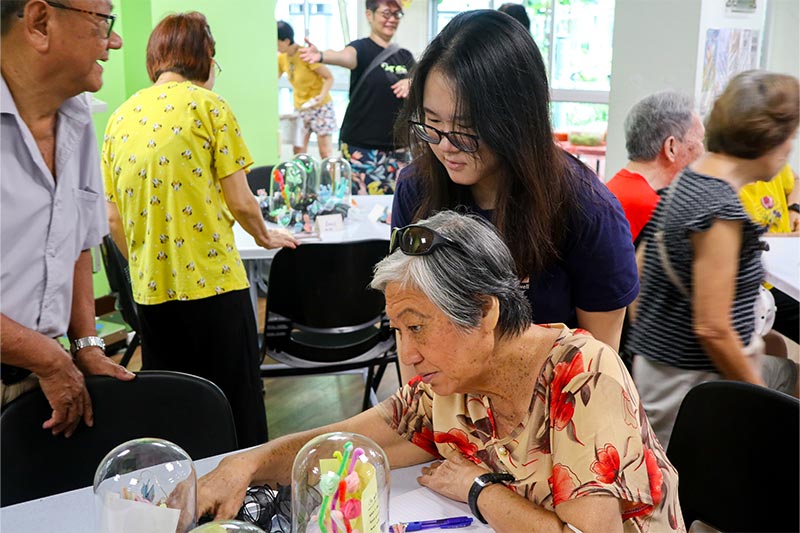
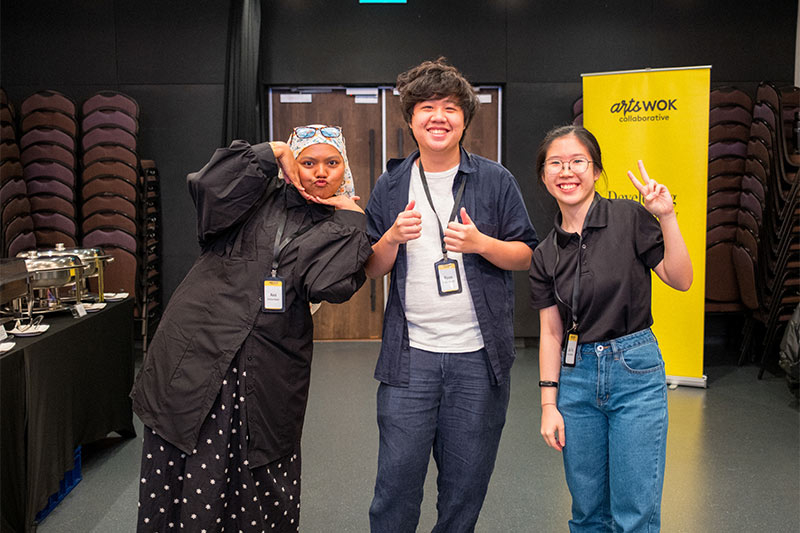
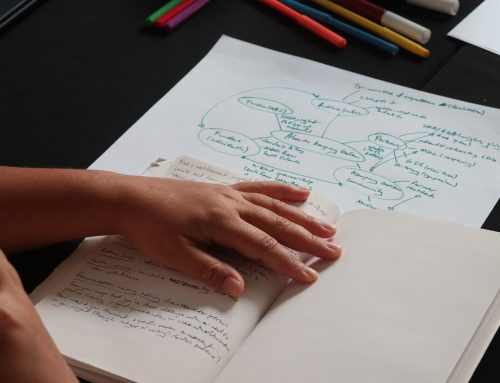
Ashley and Ryan, hard at work.
2. What would you say has been the most surprising or memorable moment you’ve had at work so far?
Ashley: Not to brag about it, but every moment getting to know the community and everything has been pretty fun. What stood out to me the most was how at the start of this year, everyone in the company shared words of affirmation with each other.
You don’t usually hear about this kind of thing from companies. I think it’s lovely because words of affirmation are a huge part of — what’s the term? — love languages. It’s great hearing from each other, especially because we’re a small company. It’s like a little family! Everyone is affirmed.
Ryan: Yeah, that was a huge highlight. It was just the eight of us, so it’s super comfy, super cosy.
Ashley: Exactly, it’s super nice. I really loved it. At first, I was a bit scared, because I was like, “Oh no, what are people going to say?”
Ryan: ‘Cause you were writing your words of affirmation on your way in!
Ashley: I had an idea in my head, it’s just that I wrote it on my paper, okay? Those are two different things. Anyways, I think it was really lovely. I absolutely loved that experience.
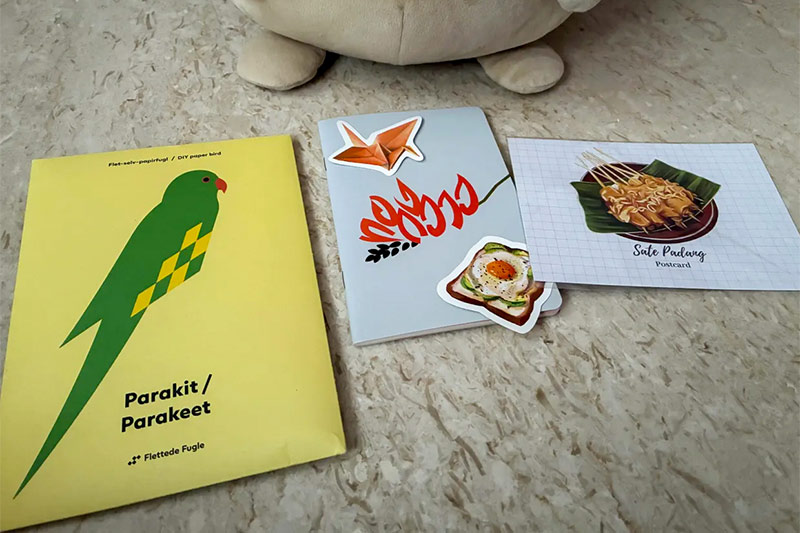
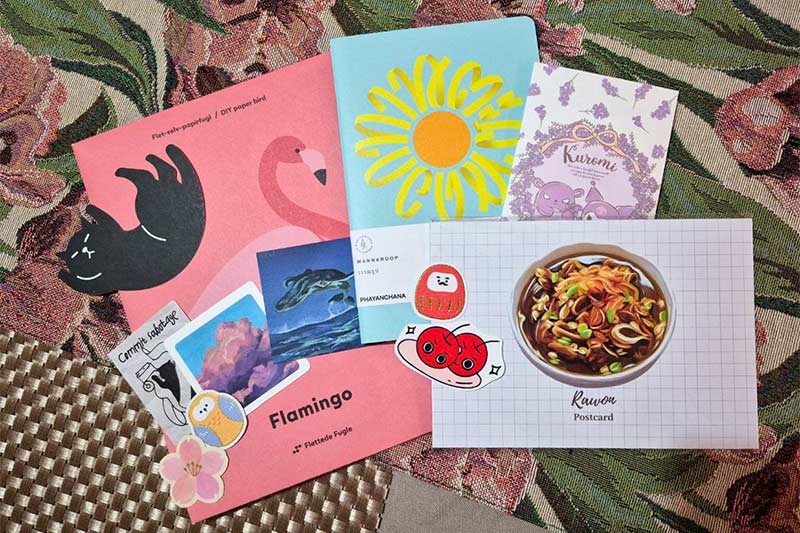
Haul from our annual words-of-affirmation session: Paper craft birds, notebooks, stickers, postcards, and lots of validation (not pictured).
3. What kind of difficulties have you faced working in your department?
Ryan: For context, I’m a marketing communication assistant. We handle what most people see of ArtsWok — so Kyara, our content creator, posts our Instagram posts and stories, our LinkedIn posts, our WhatsApp and Telegram messages, everything. I write e-mailers, and Kyara builds them. That’s the public-facing part of our work, but behind the scenes, we also do presentation decks for our corporate donors. If the programmes team is like the arms and legs of ArtsWok because they’re out there in the community, then marketing and communication is the voice of ArtsWok.
I struggled a lot with knowing what was ‘good enough’. I kept second-guessing myself through the first half of my internship. I would do a draft of an email, look at it, and not be sure if it was good enough. So, I would leave it to the side and not show it to anyone because it wasn’t perfect yet. Then I’d come back to it after a day or two.
This meant I was taking a while to put things out, and that became a problem. My perfectionism caused my urgency to drop — I write the emails, but Kyara is the one who has to make them look fancy and send them out. If I don’t have the emails ready, she can’t make them look snazzy, so me taking my sweet time was affecting her workflow.
I realised I had to lock in, and remember that perfect is the enemy of good. Sometimes, you just have to power through, you know? I’ve been doing that for the past 2 months, and things have been a lot smoother since.
Ashley: You got to lock in, bro.
Ryan: I am locked in…after 4 months of my internship.
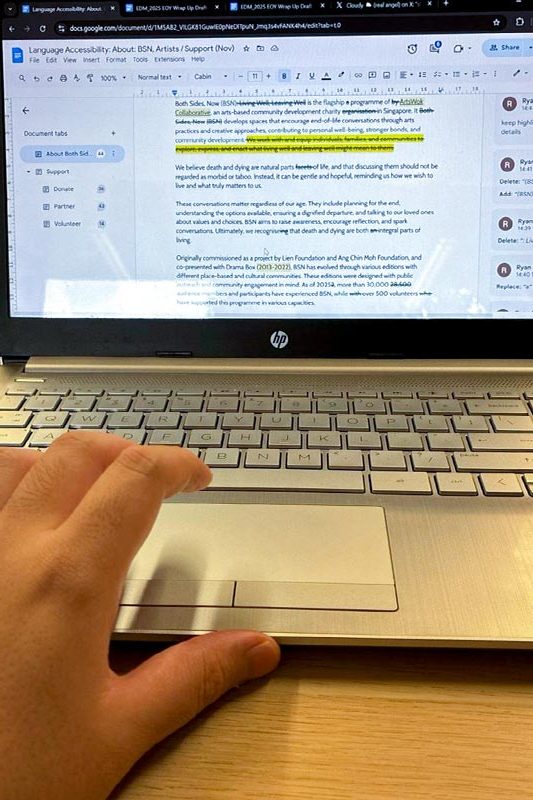
Ryan locks in.
4. What’s something about arts-based community development that you’ve learned through doing this work?
Ashley: In school, my course isn’t specifically about community development. It’s more about using the arts to approach or teach people things. I learned the theory of that — that such things exist, and it’s how some people use the power of the arts.
But theory is very different from real-life application. For me, I got to learn more of the behind-the-scenes part of it, and about what actually goes into these programmes. It’s not just, “Oh, we do arts and crafts and then we make a programme out of it” with mission and vision alone. It’s also about the logistics, the admin work, and even the evaluation.
Ryan: Actually, could you tell me a bit about that? I’ve never considered the evaluation aspect of our programmes. I just kind of assumed that if the seniors look happy, then everyone’s happy, right?
Ashley: That’s part of it. Evaluation isn’t just about saying, “as long as everyone’s happy, it’s a successful programme.” It’s also because we want our programme to impact the community. For example, our Piece of Mine workshop that we’re having now is an 8-week programme. We have a pre-survey that we do at the start of the first workshop and a post-survey at the end of the last workshop.
We get to see how their responses change from the pre- to the post-. A question could be, “How comfortable are you with death or talking about death?” Maybe they’re not very comfortable at the start, but for their post-survey, they’ve gotten better and are more comfortable now. We do ask if they enjoy the art activity, but it’s more than that — because at ArtsWok, we want to create an impact in the community. I think it’s kind of cool doing evaluation and getting to see the inner thoughts of people.
I’ve gained a bigger appreciation for the effort that goes into community work. Maybe ’cause when people do community work as a volunteer, they’ll just participate in the event, help people and stuff like that. Working from the perspective of the company that’s providing programmes to engage the community is very different because there’s a lot of work, a lot of intentional planning, and a lot of meetings that go into it.
I love meetings. I like hearing how they plan and how they improve also. So because Piece of Mine will have multiple runs, we also have meetings where we want to improve the workshop design. Seeing the behind-the-scenes — it’s really interesting. I think I’ve developed a greater appreciation.
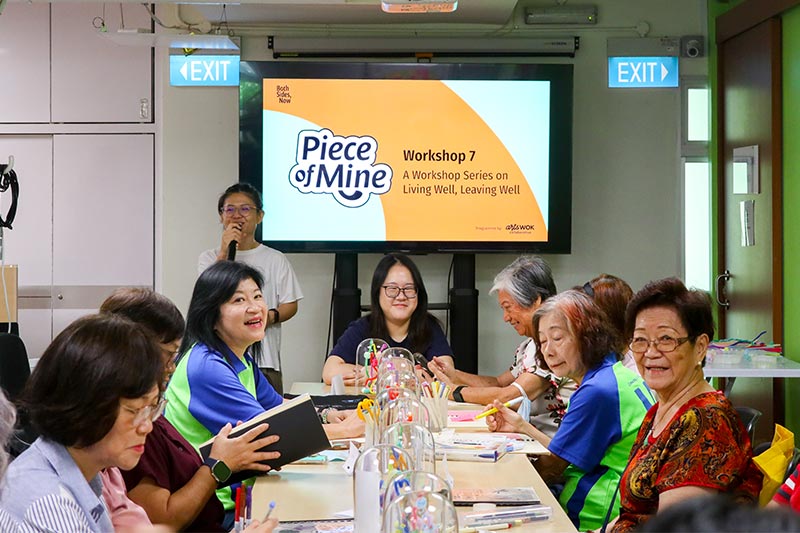
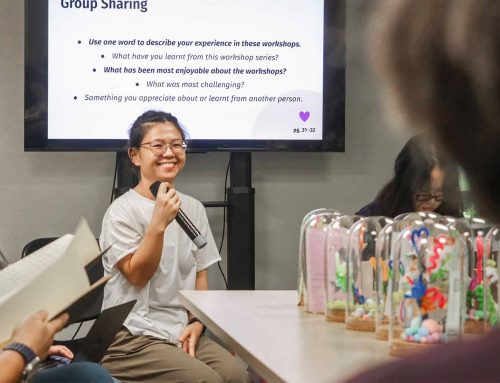
Ashley in a different, but not too different, sort of meeting.
5. How do you feel like your perspective of seniors has changed working with ArtsWok?
Ryan: Maybe not so much “changed”, but more re-contexualised?
Ashley: What does “re-contextualised” mean here?
Ryan: …changed the way I view seniors. But before all of this, the only seniors that I really had exposure to were my grandparents, right?
When I say seniors, I’m predisposed towards thinking of them as seniors, as a monolith, and not necessarily as individuals? My point is that through exposure to all these programmes, I’ve come to appreciate their individuality, their personalities, and how they all seem so enthusiastic about the art-making and how much it means to them.
Every time I’m at our Piece of Mine sessions, they’re all smiling and talking to their friends, and that’s where the community part of community development comes in. You can really feel that unity in the room.
You know how men — specifically older men — tend to not be very emotional, right? It’s rare to see them shed tears. But at one of our Piece of Mine sessions, one of the seniors there got emotional just talking about his experiences with the programme to the point that he shed tears. It’s just amazing knowing that we’re having this impact on them.
Ashley: Hmm, I think that’s great. For me, when I saw seniors before I joined ArtsWok, I was low-key kind of scared of them, because every interaction I had with them…they’re a bit rude, I guess? Not really rude, but they felt very different, maybe because of the generation gap.
Most of them also speak Mandarin, so it’s like, they argue with you in Mandarin. But coming into Piece of Mine especially, it changed my perspective of seniors a lot because of how they’re all like us in a way despite the generational gap. They’re still emotional humans.
Ryan: I feel like for a lot of people — especially youths — we tend to see seniors as seniors first, and then humans second. So I would say it’s been a very humanising sort of experience because I’ve been to three locations for Piece of Mine, and in each of those locations they’ve all been very different. And even just within these three locations that I’ve seen, you have so much diversity in the kind of seniors that you encounter.
And if you could just extrapolate and extend that to the rest of Singapore, you can just imagine the depth of character that seniors all over Singapore possess.
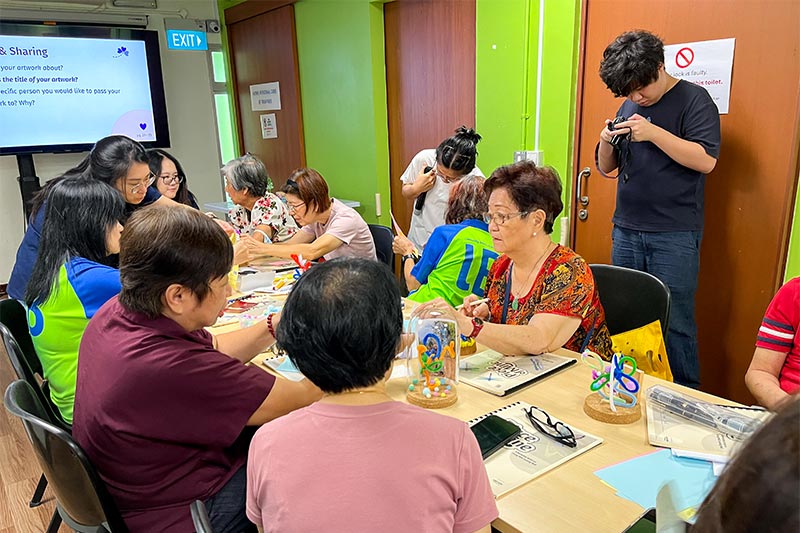
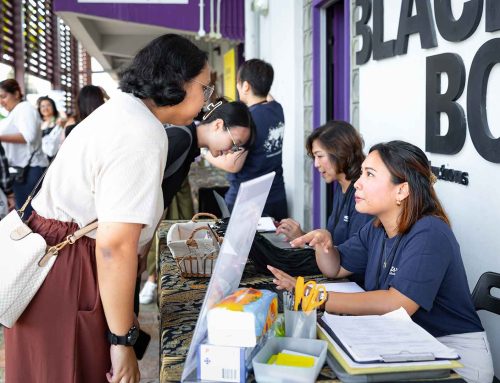
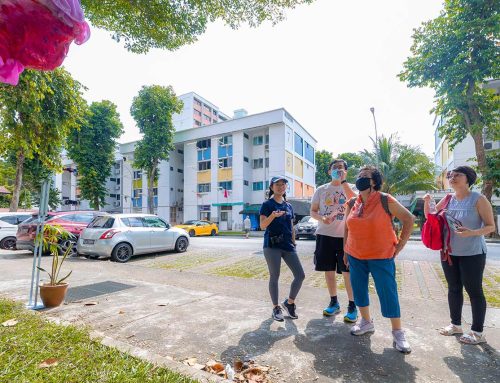
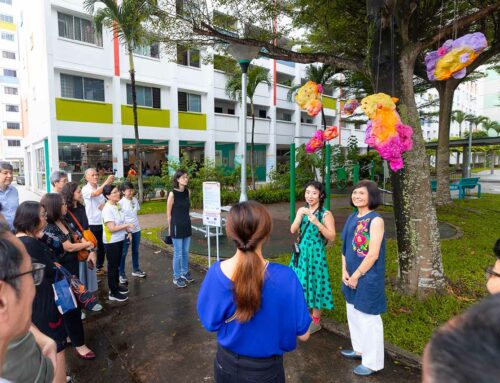
Ryan and Ashley performing their assigned duties at Piece of Mine — photographing and interacting with seniors respectively.
6. White WokCat or Black WokCat?
Ryan: I picked white because I usually wear very dark clothes to work, so I figured a white WokCat would stand out more compared to the rest of my wardrobe and everything.
Ashley: For me, I pick black. It was similar to your thought process of clothing and aesthetics-wise. I just like the colour black more. I like the colour white too, don’t get me wrong. But I chose black because it’s a more comfortable colour for me.
Ryan: I feel like black WokCat is the canon WokCat. Because the little sculpture of WokCat that we have in the office? That one’s black. And then the poster thingy that Kyara and Jerusha (Ryan’s supervisor) brought in? It’s also black. I just feel like we don’t have enough white WokCat representation.
Ashley: Exactly. #original.
Ryan: What about a rainbow WokCat or something, then?
Ashley: I actually wouldn’t mind, it’s kind of pretty. I also think children would like it as well, because it’s rainbow in colour. I think the moral of the story is we need more WokCat colours.
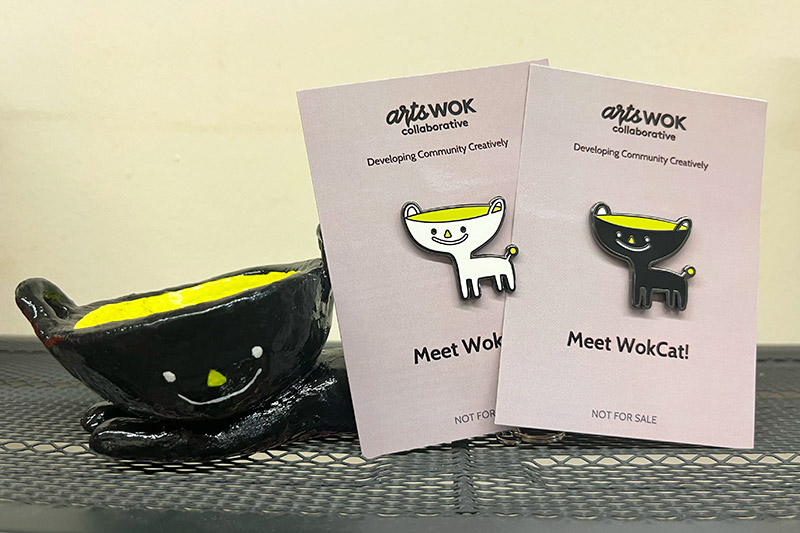
White WokCat, or black WokCat? That is the question.
7. Final remarks?
Ryan: So to the future interns, to our successors —
Ashley: Successor is crazy.
Ryan: Well, they are our successors. We hope that you have fun, and we hope that you’ll enjoy your time at ArtsWok as much as we have.
Ashley: I think they would definitely enjoy it, not going to lie. It’s really fun.
Ryan: It is, and you get free lunch once every month!
About Ashley Wong and Ryan Chia
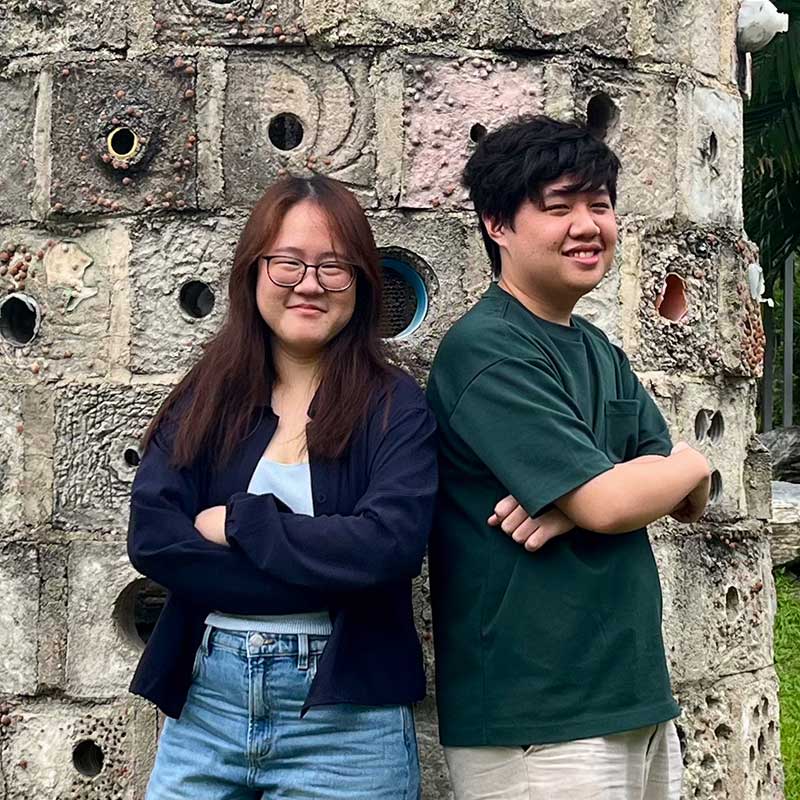
Ashley (Programme Assistant) and Ryan (Marketing and Communications Assistant) spent six months interning with ArtsWok from September 2025 to March 2026.
An arts business management student, Ashley is drawn to how creative practices can open up dialogue around end-of-life matters. Her time with us has deepened her sensitivity to facilitating such conversations with care and intention.
Ryan is curious about the many ways people live and think. As a media student specialising in story and content creation, he now approaches storytelling with a stronger attentiveness to nuance and perspective from his time engaging with communities during his internship.