
Library / Project Journal
The Art, Humanity, and Practice of Arts-Based Facilitation
Library / Project Journal
The Art, Humanity, and Practice of Arts-Based Facilitation
Interview with Karen Koh
By ArtsWok
15 Sep 2026
Creative Reflections from an Artist-Facilitator
Karen first discovered ArtsWok through the Both Sides, Now public engagement programmes in Telok Blangah, where she experienced firsthand how creative arts can spark thoughtful, accessible conversations about end-of-life matters. Drawn to this approach, she joined The Greenhouse Lab in 2021 to immerse herself in ArtsWok’s values and methodologies. Last year, she responded to an open call and stepped into the role of artist-facilitator for “Piece of Mine.”
Since then, she has continued to appreciate how creative practices bring people together to share stories, build connections, and reflect on what truly matters — a theme she captures in an original poetic reflection at the end of this project journal.
For those looking from the outside in, how would you describe what it is like to be an artist-facilitator on the ground? What is the reality of holding that space for others?
For me, being an artist-facilitator means embracing the full spectrum of the human experience. There are moments of joy and deep connection alongside uncertainty, vulnerability, and unexpected challenges. The beautiful, the messy, and everything in between are part of the work.
From the outside, facilitation can seem like leading activities or having all the answers. In reality, it is much more about being present: listening deeply, offering undivided attention, noticing both what is said and what remains unspoken, and discerning when to step in and when to let things unfold. Holding space is not about fixing someone’s experience but about creating the conditions for people to move through it in their own way.
That also means holding clear boundaries for myself — not as barriers, but as the foundation that creates stability and psychological safety. Those boundaries allow people to take creative and emotional risks, knowing there is a consistent, grounded presence holding the space. It is this consistency, expressed through care, reliability, and openness, that gradually builds trust.
Much of the work also happens internally. It requires me to stay aware of my own emotions and wellbeing, to remain grounded, and to respond thoughtfully rather than reactively. I allow myself to receive what people share, what I witness, and what I experience myself, allowing those moments to settle before they gradually transform into understanding. Sometimes that meaning emerges in the moment; other times, it only becomes clearer with time.
Throughout this journey, I find myself returning to the Chinese character 恕 (shù). Often understood as empathy or compassionate understanding, it is composed of 如 (“as if”) and 心 (“heart”), reminding me to meet another person’s heart through the lens of my own humanity. Facilitation, for me, is an ongoing practice of 恕 (shù): listening before responding, accompanying without imposing, and trusting that compassionate presence is often enough.
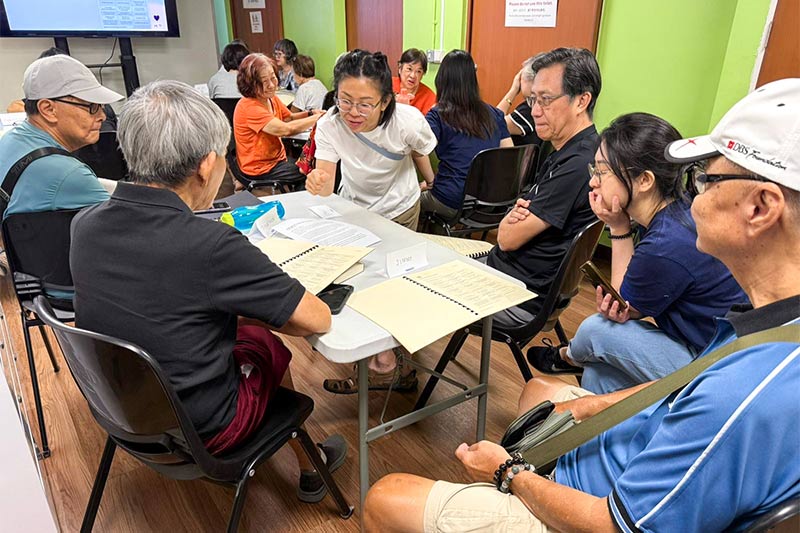
Karen facilitates a group dialogue as they explore personal values, hopes, and end-of-life considerations together at Piece of Mine.
How does your background in art therapy shape or enrich your approach when you step into the role of an artist-facilitator? Where do those two worlds meet for you?
My background in art therapy has given me a strong foundation in creating psychologically safe spaces and being attuned to people’s emotional experiences. It has taught me to stay present, become comfortable with uncertainty, and recognise that every creative process is also a deeply human one. People move at different rhythms, and not everything needs to be solved or explained.
It has also shaped my understanding of boundaries —- not as something restrictive, but as the structure that allows trust to grow. Through clear boundaries, consistency, and a grounded presence, people often feel more able to explore, express themselves, and engage authentically with the creative process.
At the same time, being an artist-facilitator gives me the freedom to embrace creativity beyond therapeutic goals. These are spaces where imagination, play, and experimentation can flourish, and where people connect with one another through the simple act of making together.
For me, the two worlds meet in their shared belief that art can help us make sense of ourselves, our relationships, and experiences that are often difficult to put into words. Art therapy keeps me grounded in presence, ethics, and care, while artist-facilitation reminds me to stay open, curious, and playful. Holding both perspectives allows me to create spaces that feel psychologically safe while inviting exploration, connection and possibility.
Looking back on what transpired over your eight weeks, what was a pivotal moment or breakthrough during that journey that truly defined the experience for you?
The pivotal breakthrough for me was witnessing how conversations about death gradually shifted from something participants felt they had to avoid into something they could approach with openness, curiosity, and care. What began with understandable hesitation slowly evolved into a space where difficult emotions could be acknowledged, shared, and held collectively.
This shift unfolded through arts-based activities such as role-play, reading aloud, reflective writing, small-group dialogue, and creative art-making. Together, these creative experiences offered gentle entry points into conversations about loss, mortality, legacy, and hope. As trust deepened over the weeks, participants became more willing to share personal memories, express vulnerability, and listen deeply to one another. Their artworks and reflections began to express not only individual experiences but also a growing sense of collective understanding.
Alongside their growth, my own facilitation practice also shifted. I learnt to trust the process more deeply, letting go of the need to direct every conversation and instead responding to the emotional rhythm of the group. Allowing silence, uncertainty, and creativity to lead deepened my capacity to hold space rather than provide answers. I came to realise that the most meaningful moments often emerged when participants shaped the experience themselves. Facilitation is, at its heart, a soulful craft of cultivating a resilient, life-giving space where people can grow deep roots together.
Perhaps the most meaningful transformation was seeing the group become a genuine community. Tears sat comfortably alongside laughter, silence became as meaningful as conversation, and the imaginary plants that participants created became living symbols of resilience, connection, and legacy.
By the end of the workshop series, participants had created far more than artworks. Together, we had cultivated a space of belonging where conversations about death became conversations about life — our identities, our relationships, what truly matters, and how we hope to be remembered. That, to me, was the true breakthrough.
Your poetic reflection also reminds us how vital it is for facilitators to process their own experiences. Why do you feel creative reflection is so important for practitioners in this field, and what advice would you give to new facilitators trying to find their own rhythm?
Creative reflection is how I make sense of what I carry. As facilitators, we constantly witness other people’s stories, emotions and moments of vulnerability. Without creating space and time to process our own experiences, it becomes easy to feel overwhelmed or disconnected from ourselves.
For me, making art, writing, or simply sitting quietly with my thoughts transforms those experiences into something I can learn from, rather than something I simply carry. It also reconnects me with why I do this work, and reminds me that facilitation is as much about growing as a practitioner as it is about growing as a person.
To new facilitators trying to find their own rhythm, I would say it is like hiking through a forest. There is no single path to follow, and each journey unfolds differently. Your practice grows through patience, care, reflection and the relationships you nurture along the way. Keep walking, keep learning and trust that your path will reveal itself over time.
Pace yourself. Honour your boundaries. Build in small regular rituals to decompress, reflect, and reconnect with yourself. Stay curious. Stay present. Breathe. Trust that you do not need to have everything figured out.
Meaningful facilitation is not about having all the answers. It begins with the willingness to embrace the fullness of human experience with grace, humility and compassion – for others, and for yourself.
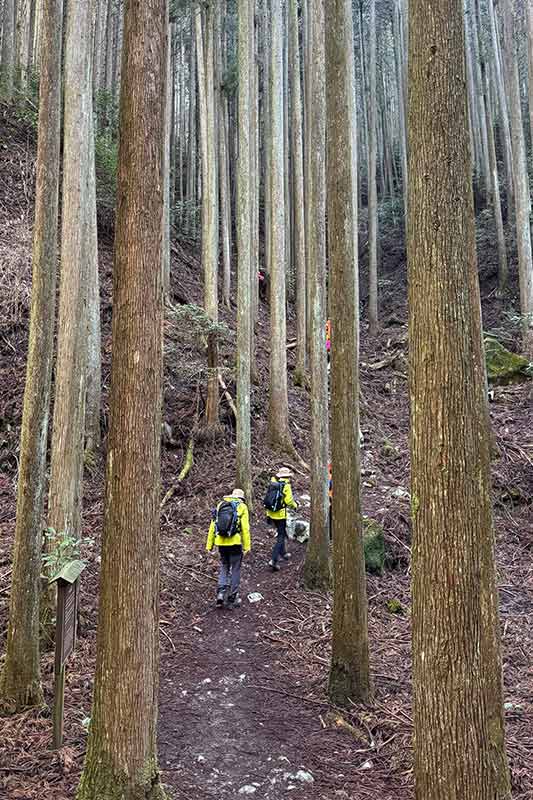
Kumano Kodo – Nakahechi March 2026
Poetic Reflection
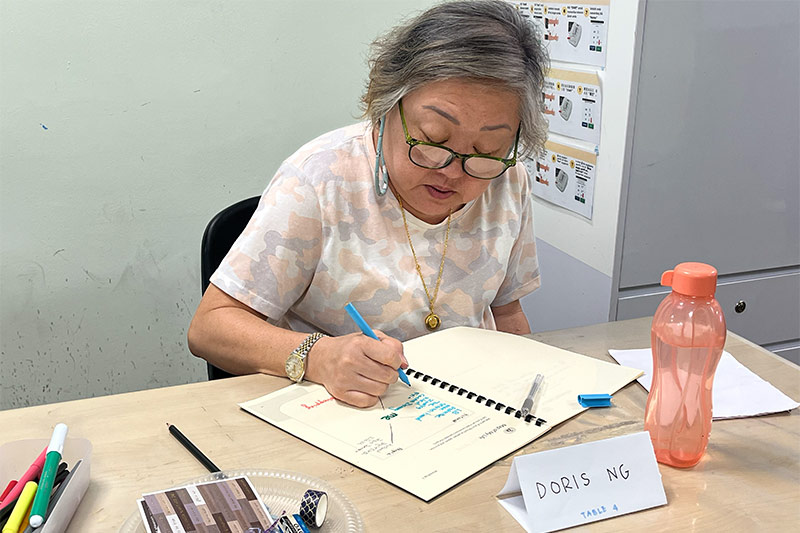
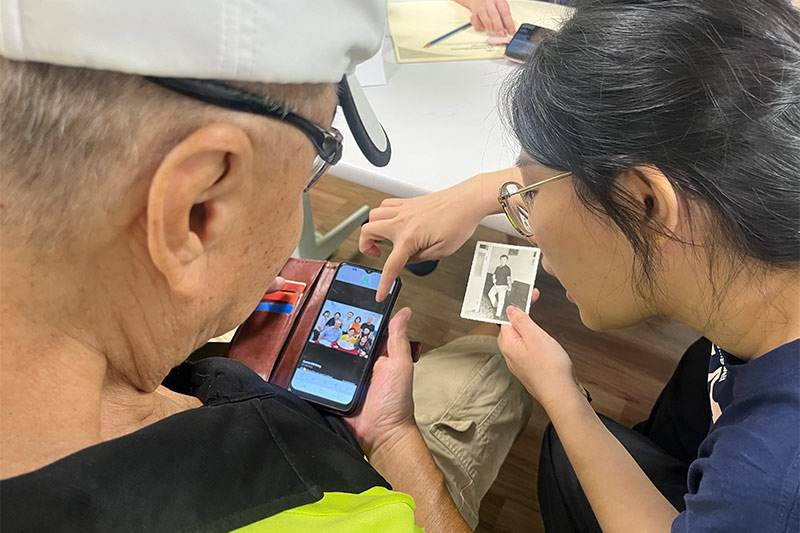
At Lions Befrienders, Tampines 494E,
sixteen hearts gathered in September’s morning light.
We came together — curious, hesitant, alive —
to create, to remember, to reflect.
Through gentle hands and true words,
we wrote our stories, shared our treasures,
and learned to speak softly of what is often unsaid —
death, dying, and the tenderness of living.
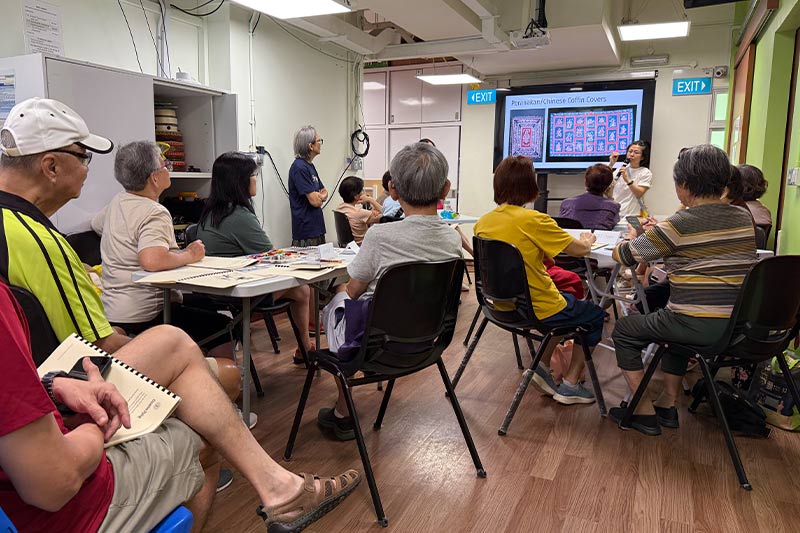
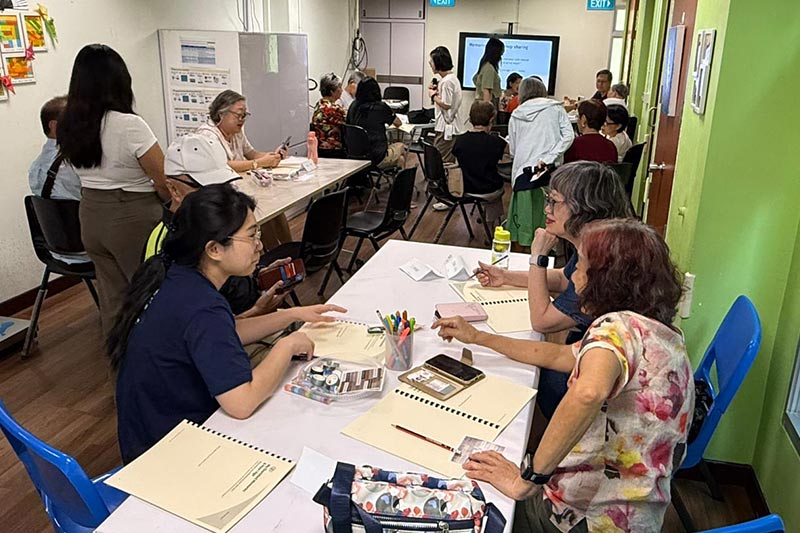
We learned new things about death and dying,
not as distant ideas, but as part of our living.
In small groups, we spoke openly and listened deeply,
sometimes with hesitation, sometimes with ease.
We shared what we once feared, what we have seen,
and what we hope for.
Through honest conversations,
we found comfort in knowing
that understanding death is also understanding life.
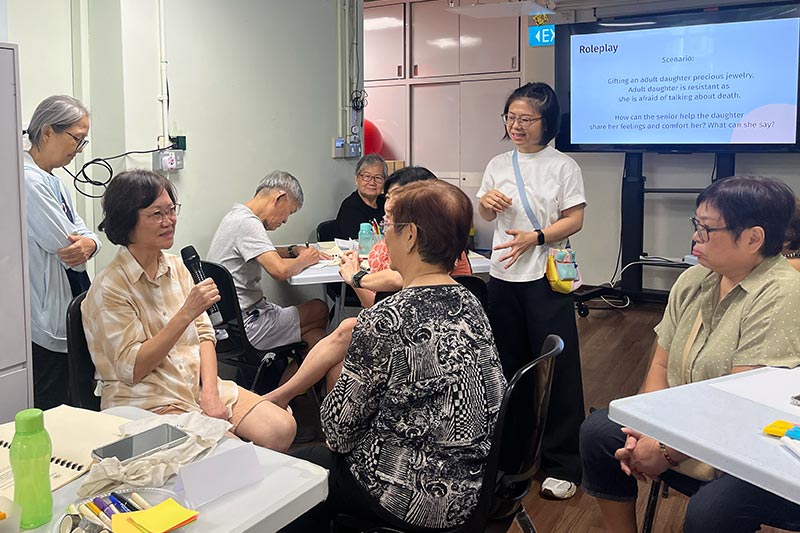
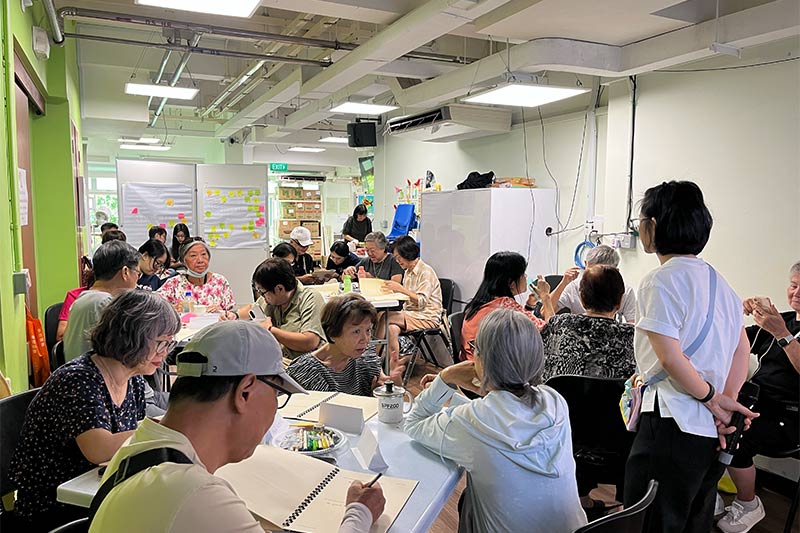
In small circles, we listened actively.
Through role-play, we faced the difficult and the dear,
asking ourselves deeper questions
that only the heart can answer.
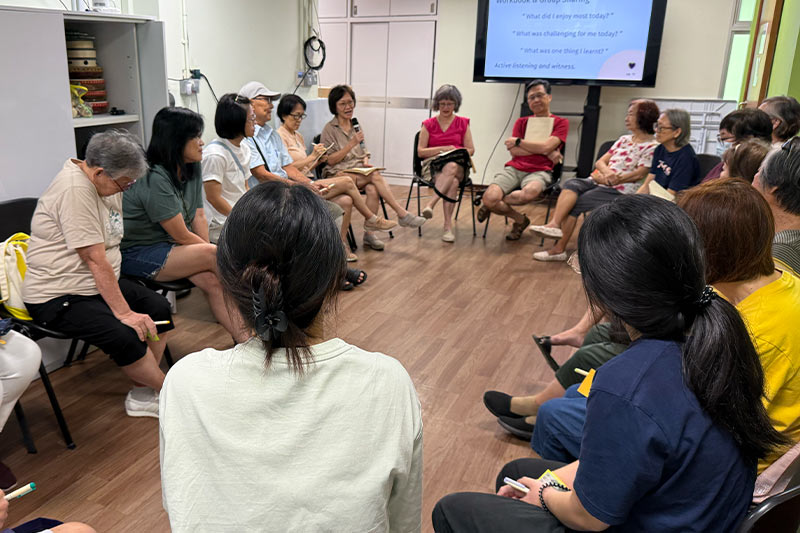
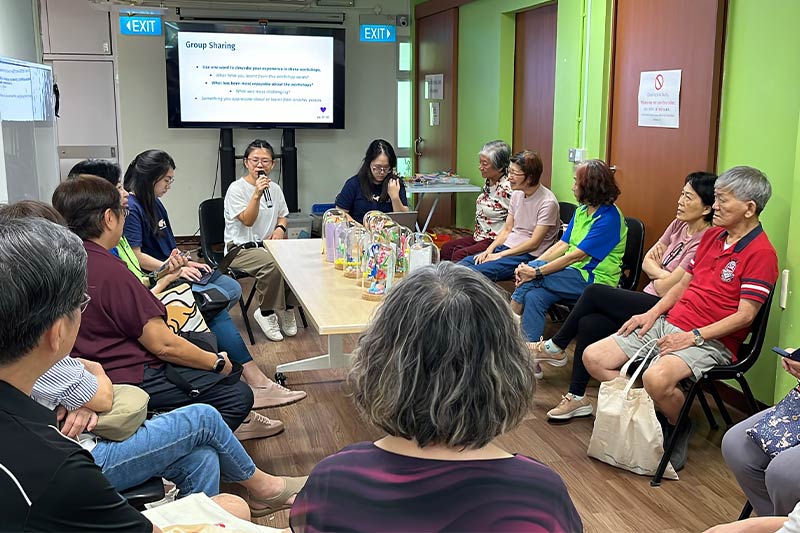
Then, as one larger circle,
we held space for all that surfaced —
tears, frustrations, laughter, and joy —
our magic circle of being and becoming,
an artful reflection of how complexities can co-exist.
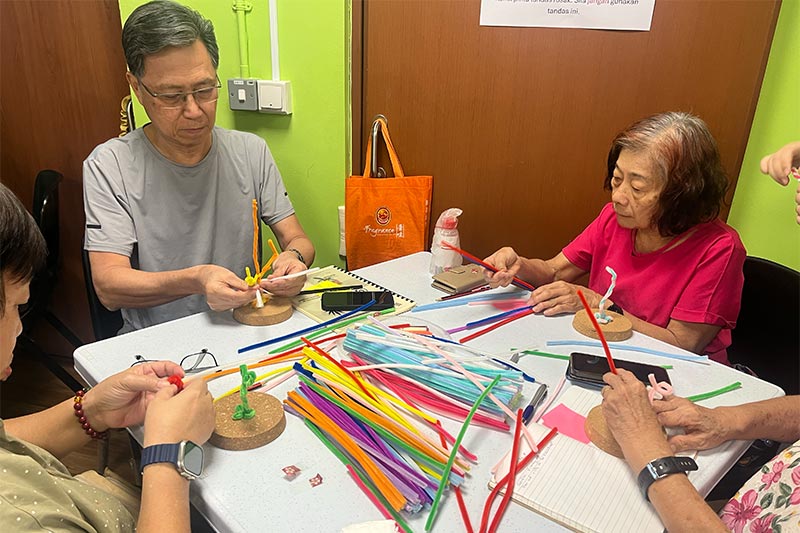
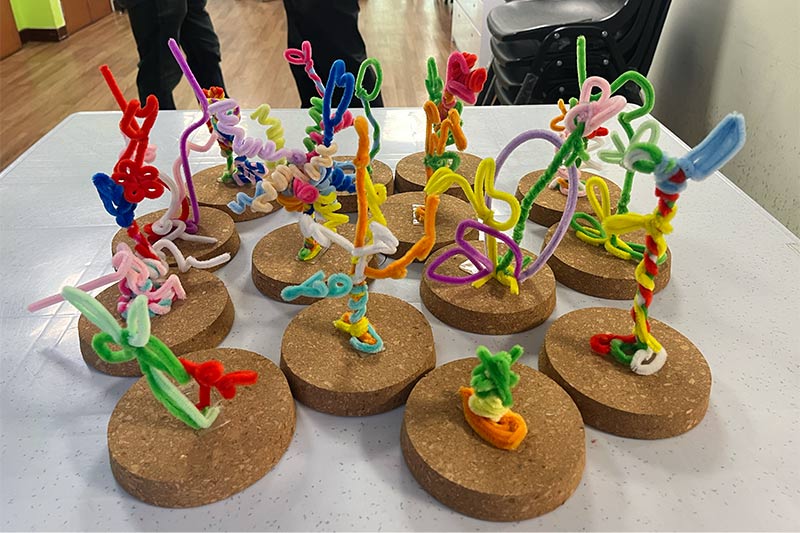
With colours flowing and shapes blooming,
we grew our imaginary plants —
roots from memories, stems of stories,
leaves unfolding from values and love.
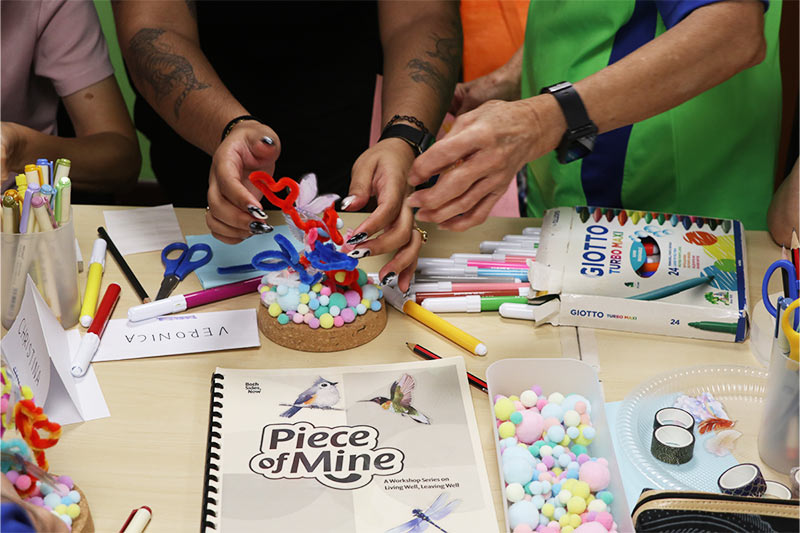
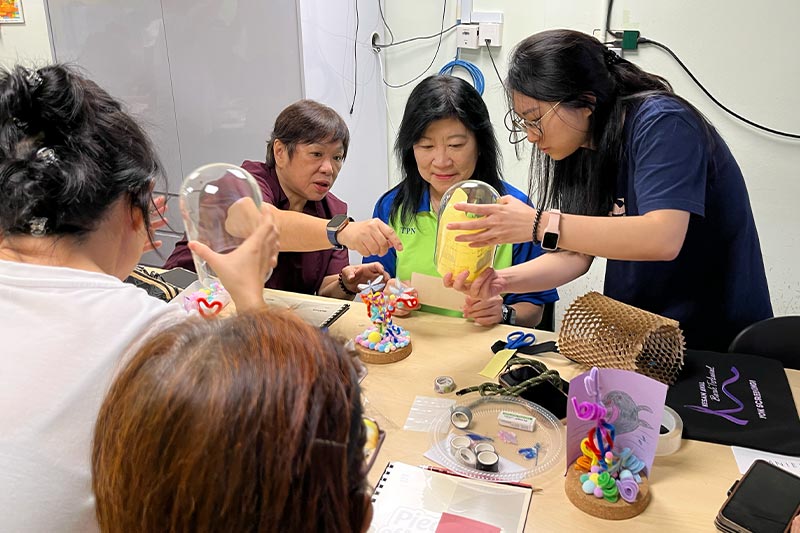
As the weeks passed,
we pieced together something more than art —
we pieced together each other.
Gently, quietly, we learned
that we do not walk alone.
Through this journey — eight weeks and beyond —
we carry the courage and compassion
that bind our hearts in friendship.
In life, in death, and in every tender in-between,
we hold within us
a peaceful mind,
a piece of mine.
About Karen Koh
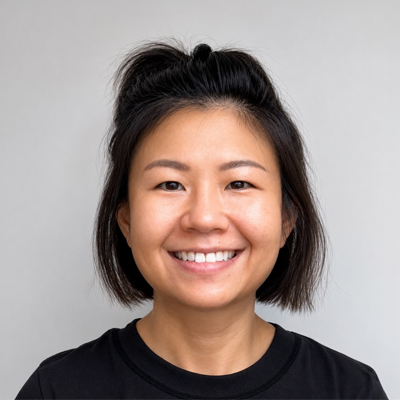
Karen is an art therapist-artist with over a decade of experience across healthcare, social service, museum, and community settings. She holds a Master’s in Art Therapy and a BA in Psychology, and is registered with the Art Therapists’ Association of Singapore. Her practice centres on cultivating holistic well-being through creative processes and meaning-making, with community-engaged projects involving people from all walks of life. Grounded in care and co-creation, she is dedicated to making the arts accessible and relevant to everyday life.